
Space Exploration - Time To End This Farce?
Updated: Sep 5, 2022
Since the late 1950s, huge amounts of public money have funded man’s exploration of space, and the ultimate dream of colonizing other celestial bodies. In its infancy, this foray into unknown regions evolved into a well-publicised struggle between two superpowers, namely USSR and USA.
Who would be the first past the post in their quest to reach the Moon? This chapter in man’s history was, allegedly, completed in July 1969, when Neil Armstrong famously uttered those iconic words “That’s one small step for (a) man; one giant leap for mankind.” NASA had apparently beaten their Russian opponents, successfully placing the star-spangled banner in the dry, dusty lunar surface.
Since then, we’ve seen many other countries create their own space exploration projects. China is now a big player in this field of endeavour, along with the European Space Agency. As a result, the amount of money spent worldwide has sky-rocketed, if you’ll pardon the pun.
So, after decades of research and countless missions, what do we as a species have to show for all the money and effort? Has mankind benefitted in any way, shape or form from these voyages? Have we been able to end world poverty, famine, homelessness, disease or conflict? Have the endless circus acts, with floating bottles and somersaulting astronauts, accompanied by the nauseating adulation, brought us any nearer to solving all the ills of this world? No, I didn’t think so.
One could quite legitimately question the morality of such a situation, where many nations struggle economically, whilst more affluent countries fritter away obscene levels on what some may describe as a folly.
Before we make Mars a new home, should we not first put our own house in order, and help the less fortunate with their plight? How can we stand by and watch children die of starvation and illness, whilst throwing away fortunes in such a blasé manner?
This could be deemed an obscene injustice. But, placed alongside the recent political policies of austerity and belt-tightening by governments worldwide, and the ever-growing disbelief in the actual authenticity of space projects, it edges towards being a crime against humanity.
As an example, for years, many have questioned whether man really set foot on the Moon. For me, the most compelling evidence of fakery has nothing to do with the usual citations such as shadows cast in multiple directions, or wires attached to space suits.
Having watched the press conference held by the trio of astronauts shortly after the Apollo 11 mission, their demeanour screams out that something was amiss with the whole story. You can watch it by following the YouTube link here: https://www.youtube.com/watch?v=BI_ZehPOMwI
More recently, doubters have turned their focus towards the International Space Station (ISS), and the very implausible claims made by NASA about its operational success. The fact that vast amounts are going towards these projects is one thing, but the possibility this cash is fuelling one massive co-ordinated scam is another.
It has also been suggested that what the public see is nothing more than a front, with money going towards very costly secret space projects. If that is so, then the people need to know.
No doubt any scientist worth his or her salt will, as a reflex, spring to the defence of these highly funded organisations, with justifications as to why the exploration should continue. And why wouldn’t they, especially if their job depended on it?
Well, there are several reasons why the whole issue should be scrutinised with a fine-tooth comb. The public have every right to know where this money is going, and to what ends.
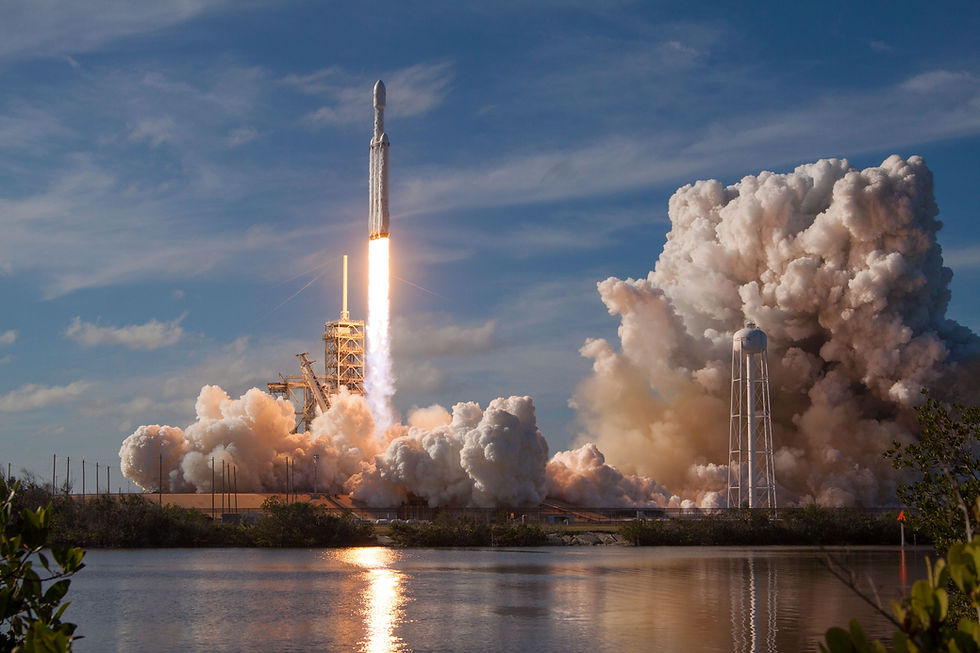
We’ve surely all seen the now tired and tedious launch of a rocket, with the latest eighty-year-old technology. The first stages of the flight show the various sections of the ship being discarded. Things are going well. Then suddenly, inexplicably, the viewers are watching a looney tunes cartoon, the quality of which would have made Walt Disney himself envious. It’s as if cameras are suddenly rendered inoperable once a certain altitude is reached.
So, all you space agencies out there, why, with all your funding and research facilities at your disposal, have your technologies hardly advanced in more than fifty years?
One could argue that the SpaceX rockets are ground-breaking, in that they land vertically on a surface in the same manner they took off. But other than enabling a ship to be re-used, what benefit does this afford? What benefit does any of it provide?
NASA very recently announced their new project Artemis I, II and III, the aim of which is to return humans to the moon by 2025. The claim is that eighty per cent of the current population were either not born, or too young to have witnessed the 1969 event. It appears NASA consider it necessary to fool the remainder.
A SpaceX rocket is to be utilised for the Artemis III stage, it being the eventual landing module. I’ve watched the animated presentation which briefly explains the various stages of the mission. Scanning through the comments section below it, the vast majority were concerned with the costs involved.
I agree with that sentiment, but for me, the question should be WHY?
If anyone out there can provide one example of space exploration having advanced mankind’s plight, then let me know. But before you do, make sure you consider the countless emaciated children dying of starvation, pleading for a supply of freshwater, whilst disease-carrying insects crawl across their feeble bodies. Go on, please change my mind.


Comments